
NGOAB Digital Service System Redesign
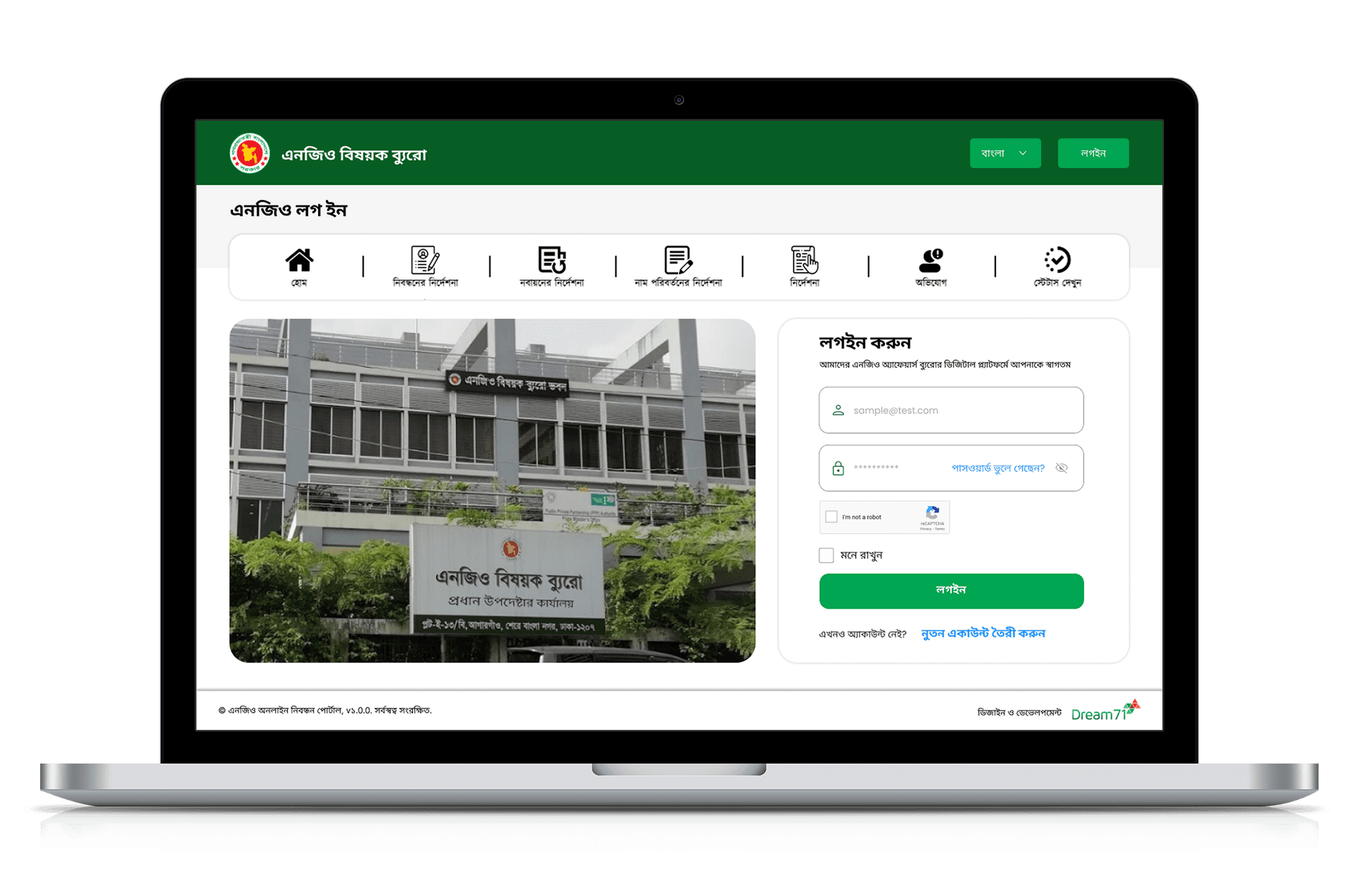
Led the UX redesign for the NGO Affairs Bureau's digital services, aiming to enhance efficiency, transparency, and accountability for over 2,600 NGOs in Bangladesh under a UNDP-supported project.
Understanding the Stakeholders
The process began with deep engagement with both NGO representatives and NGOAB officials through interviews, focus groups, and contextual inquiries to understand their day-to-day challenges.
Research Methodology
A human-centered design approach was employed, involving extensive qualitative research to map existing workflows, identify bottlenecks, and uncover the needs and frustrations of all user groups involved in the NGO service delivery lifecycle. This involved user interviews, contextual inquiries, and focus group discussions.
Defining the Core Problem & Users
The research crystalized the core problem: a fragmented and inefficient system was hindering NGOAB's ability to regulate and support NGOs effectively, impacting national development goals.
Project Background
The NGO Affairs Bureau (NGOAB), operating under the Prime Minister’s Office, regulates and supports more than 2,600 registered NGOs across Bangladesh. Despite its vital role, the bureau faces challenges due to limited human resources and an outdated digital infrastructure. The UNDP, in collaboration with DFAT and NGOAB, initiated the ISPAT Project to modernize service delivery, improve transparency, and ensure accountability in managing foreign-funded development initiatives.
Problem Statement
The NGO Affairs Bureau's reliance on an outdated and manual digital system created significant operational hurdles, making it difficult for NGOs to get timely approvals for foreign donations and for the bureau to maintain transparent oversight. This inefficiency directly affected the implementation of critical development projects across Bangladesh.
User Personas
NGO Representative
"I need a simple way to submit my project proposals and get updates without calling the office."
NGOAB Official
"I need to review and approve applications efficiently and see a clear history of each NGO's projects."
PMO Administrator
"I need high-level reports on foreign funding and NGO performance to inform national policy."
Key Pain Points
Outdated Digital Infrastructure
The existing system was slow, difficult to navigate, and lacked the features needed to manage complex NGO operations efficiently.
Inefficient Workflows
Manual and paper-based processes for registration, fund clearance, and reporting led to significant delays and administrative burden.
Lack of Transparency
NGO representatives had no clear visibility into the status of their applications, leading to frustration and frequent follow-ups.
Limited Reporting Capabilities
The bureau struggled to generate timely and accurate reports on NGO activities and foreign donations, hindering strategic planning.
User Access Matrix
A detailed access matrix was designed to ensure security and role clarity within the platform.
| Feature | NGO User | NGOAB Official | PMO Admin |
|---|---|---|---|
| View Services | |||
| Submit Project Proposals | |||
| Track Application Status | |||
| Manage NGO Profile | |||
| Process Applications | |||
| Communicate with NGOs | |||
| Manage System Settings | |||
| View Analytics & Reports |
User Journey Map
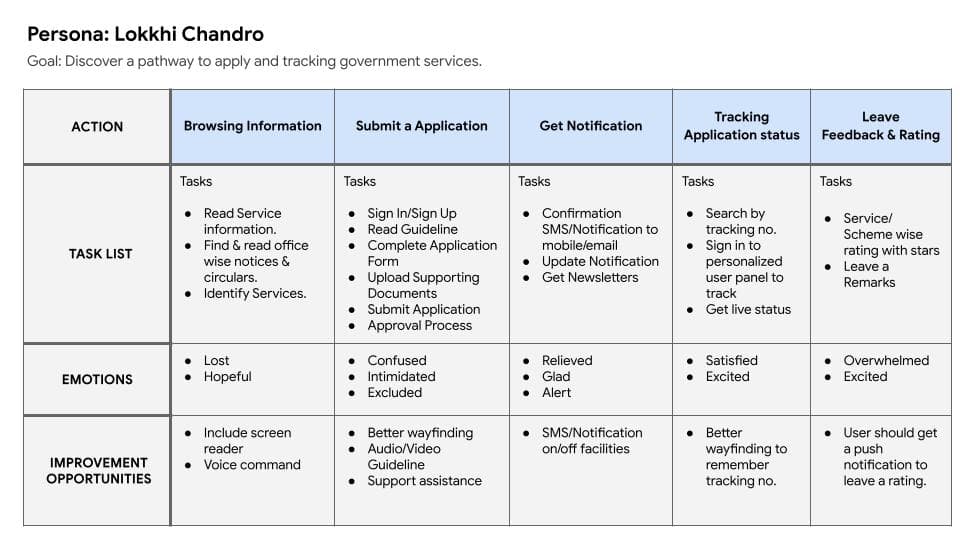
Mapping the user journey was critical to visualize the experience of an NGO representative, from initial project proposal submission to final fund clearance, identifying key touchpoints for digital transformation.
Co-Creating Digital Solutions
Through participatory workshops with stakeholders, we brainstormed and co-designed solutions focused on efficiency, transparency, and user-friendliness.
Key Design Solutions
The ideation phase produced three core pillars for the new system, each designed to address specific pain points identified during research.
Unified Service Portal
A centralized platform for NGOs to access all services, from registration and project proposals to annual reporting.
Streamlined Approval Workflows
A digital, multi-stage approval process with clear status tracking for both NGOAB officials and NGO users.
Analytics & Reporting Dashboard
Powerful dashboards for NGOAB to monitor activities, track foreign funding, and generate insightful reports.
Building & Validating the Vision
High-fidelity, interactive prototypes were developed and put into the hands of real users to gather feedback on usability, accessibility, and overall performance.
Prototype Highlights
Prototypes simulated the end-to-end workflow, from an NGO submitting a new project proposal to an NGOAB official reviewing and approving the fund release.
Usability Study Findings
Round 1 (NGO Representatives)
- Users need a centralized dashboard to view all their applications and reports.
- A simplified, multi-step form for project proposals is crucial.
Round 2 (NGOAB Officials)
- Officials require a robust filtering and search system to find specific NGO projects.
- An automated notification system for application status changes is highly requested.
- A clear, visual representation of data is needed for internal reporting.
- The approval workflow needs to be configurable with multiple stages.
Projected Impact
Project Impact
The redesigned system is projected to significantly reduce processing times for NGO project approvals, enhance transparency in foreign fund management, and provide robust data for national development planning.
Key Learnings
This project underscored the importance of stakeholder alignment in complex government projects. A participatory design process was critical to building consensus and ensuring the final product met the diverse needs of both regulators and service users.
Key Performance Indicators
Next Steps
Phased Rollout
Begin a phased implementation, starting with a pilot group of NGOs to gather real-world feedback.
Capacity Building
Conduct training sessions for NGOAB officials and NGO users to ensure smooth adoption of the new system.
Continuous Iteration
Establish a feedback loop for continuous improvement and addition of new features based on user needs.